


By Priya Vaswani – Associate Director at Abacus Financial Services
At first glance, a master-feeder structure can sound technical. In practice, it is a straightforward way of allowing different investor groups to access the same underlying strategy.
A simple structure with a clear purpose
In a master-feeder arrangement, feeder funds raise capital from different groups of investors. Those feeders invest into a single master fund, and it is at master fund level where the actual investment activity takes place.
Rather than managing each investor group separately, capital is brought together into one pooled strategy. This allows the manager to operate more efficiently while ensuring all investors participate in the same underlying portfolio.
Why structure it this way?
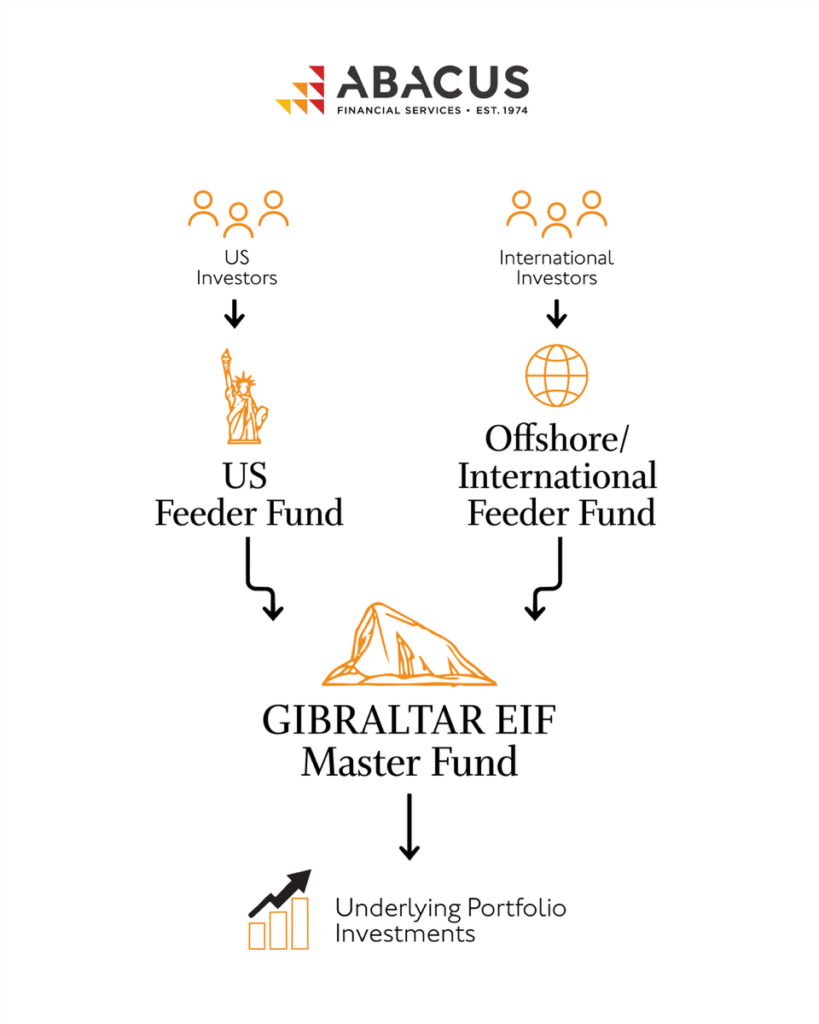
One of the reasons these structures remain so widely used is that investors rarely fit into a single mould. Different investor groups may need to come through different feeder vehicles because of legal, regulatory, tax or reporting considerations, even when they are all investing into the same underlying strategy.
A master-feeder structure allows a manager to accommodate these differences at the feeder level, while keeping the investment strategy consistent at the core, enabling the manager to focus on what matters most: the investment strategy itself.
While a Gibraltar fund can allow direct investment from US investors, a fund manager may still prefer to group and segregate US investors from others for regulatory, tax, cost or other reasons. This can be achieved by establishing an “onshore” US feeder fund, which would then invest or “feed” into a Gibraltar master fund. As with any such arrangement, careful legal and structuring advice is key to ensuring the chosen structure is appropriate for the investor base and jurisdictions involved.
How the value flows
A key feature of this model is how performance is allocated.
Take a simple example:
- If one feeder owns 70% of the master fund
- And another owns 30%
Any profit or loss generated at the master level is allocated back to the feeders in those same proportions. This ensures each investor group receives its fair share of the underlying performance. It’s consistent, coherent and cost-efficient.
For the model to work properly, subscriptions, redemptions, ownership percentages and the allocation of profit and loss all need to be reflected accurately across both the feeders and the master fund. Even small timing or allocation errors can create inconsistencies in NAV calculations, which is why the support of a strong fund administration is such an important part of running these structures well.
Why it matters
The strength of a master-feeder structure lies in how it brings simplicity to what could otherwise become complex.
By separating investor-level considerations from the investment activity itself, managers can run a single, consistent strategy without needing to duplicate it across multiple vehicles.
In practice, this means fewer moving parts at portfolio level, clearer oversight, and a structure that can scale as new investor groups are added.
For managers operating across borders, this structure provides a practical way to accommodate different investor requirements without compromising the integrity of the investment approach.
In this context, a Gibraltar fund can play a flexible role within the structure, whether as a feeder or master fund, offering a well-regulated platform for accessing a broader international strategy.
Final thought
At its core, a master-feeder structure is not about adding layers, it is about removing friction.
Investors may come with different requirements, but the underlying strategy can remain the same.
When the structure is supported by strong administration and accurate allocation of value, it provides a clear, consistent and scalable framework for managing capital across different investor groups.